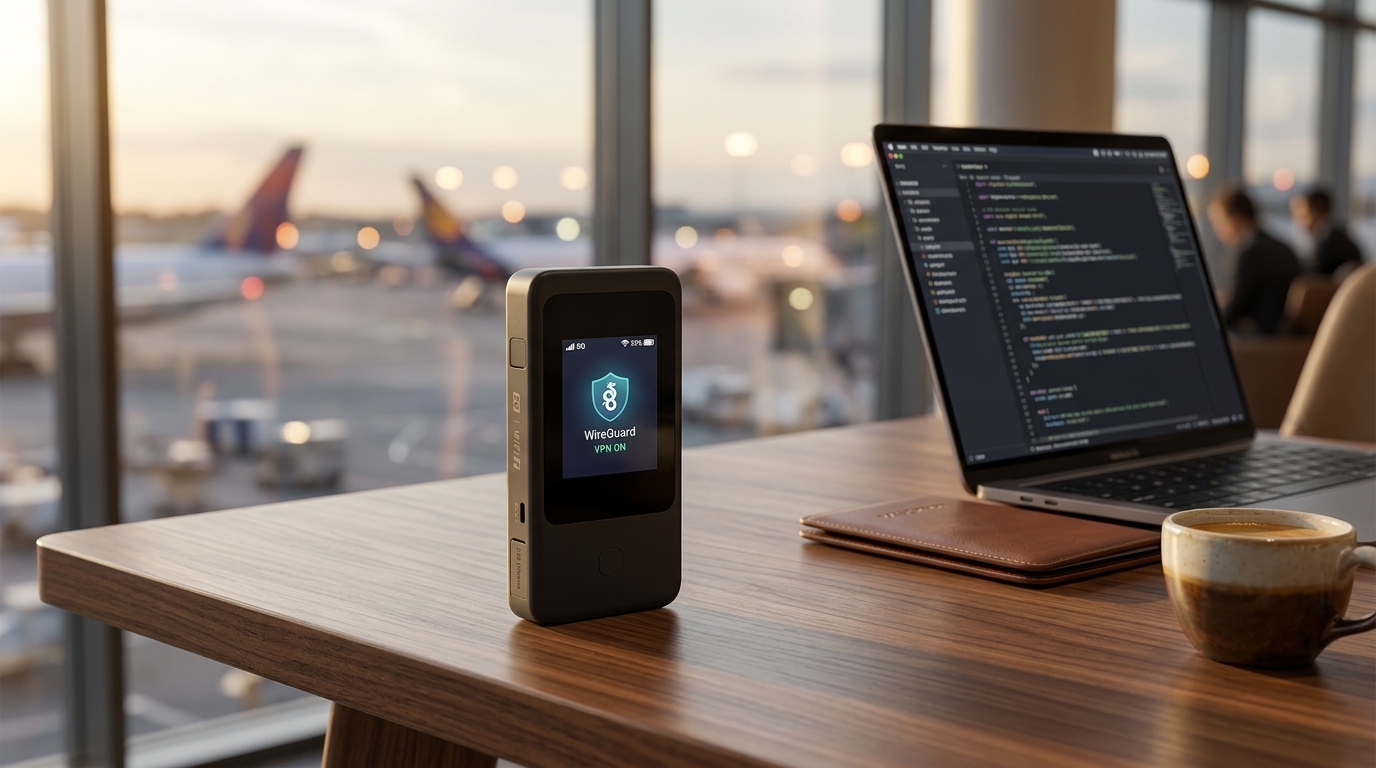
Road warriors and remote engineers have endured a maddening compromise for years: either buy a carrier-locked hotspot with zero VPN controls or carry an unpowered travel router tethered to an overheating smartphone. The GL.iNet Mudi 7 (GL-E5800) completely eliminates this friction. Engineered specifically for digital nomads, field engineers, and privacy purists, it combines an enterprise-grade mobile hotspot, an OpenWrt hardware firewall, and a multi-gigabit wireless router into a single pocketable device. Whether dodging hotel captive portal restrictions, securing sensitive client data over public airport Wi-Fi, or keeping an entire mobile workstation connected on the road, the Mudi 7 delivers uncompromising security and independence in one unified package.
Cellular & Wi-Fi 7 Powerhouse
Under the hood, the Mudi 7 is a cellular and wireless powerhouse powered by Qualcomm’s 4nm Snapdragon X72 5G modem, capable of theoretical Sub-6 downlink speeds up to 4.67 Gbps. Paired with a next-generation Tri-Band Wi-Fi 7 (BE9300) radio, it unlocks expansive 320 MHz wide channels across the uncluttered 6 GHz spectrum. In congested airports and packed conference halls where 2.4 GHz and 5 GHz bands choke under interference, the Mudi 7 cleanly slices through wireless noise to deliver low-latency multi-gigabit throughput to your laptops, tablets, and phones simultaneously.
Dedicated Cryptographic Muscle & OpenWrt 24
Where the Mudi 7 truly pulls away from commercial hotspots like the Netgear Nighthawk is its dedicated cryptographic muscle and open-source operating system. Driven by a quad-core 2.2 GHz processor and 2 GB of RAM running OpenWrt 24 (GL.iNet OS 4.x), it churns out blistering 600+ Mbps WireGuard and 700 Mbps OpenVPN (with Data Channel Offload) encrypted throughput. Every connected device—including streaming sticks and gaming handhelds that cannot run VPN software natively—is instantly cloaked behind full-tunnel military-grade encryption, supported by native AdGuard Home DNS sinkholing to block tracking and malicious pop-ups before they ever reach your screen.
Long-Haul Power & Mains Bypass Mode
Power delivery and thermal endurance have also been engineered with long-haul travel in mind. The router is energized by a generous 5,380 mAh removable lithium battery, delivering 11 to 13.5 hours of continuous real-world multi-device connectivity on a single charge. Crucially for vanlifers, RVers, and remote workers working from mobile offices, the Mudi 7 features an intelligent Mains Bypass Mode: remove the battery entirely, plug into a standard USB-C Power Delivery source, and operate 24/7 without thermal stress, battery wear, or the danger of lithium swelling under continuous load.
Ergonomics, Dual-SIM & Captive Portal Takedown
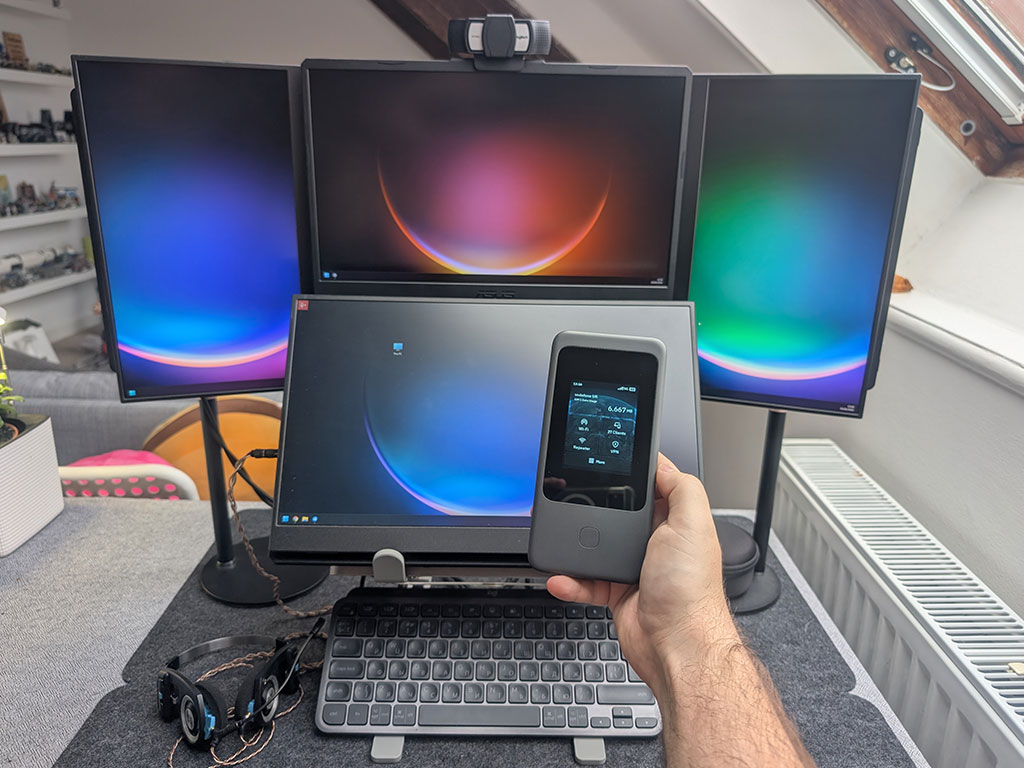
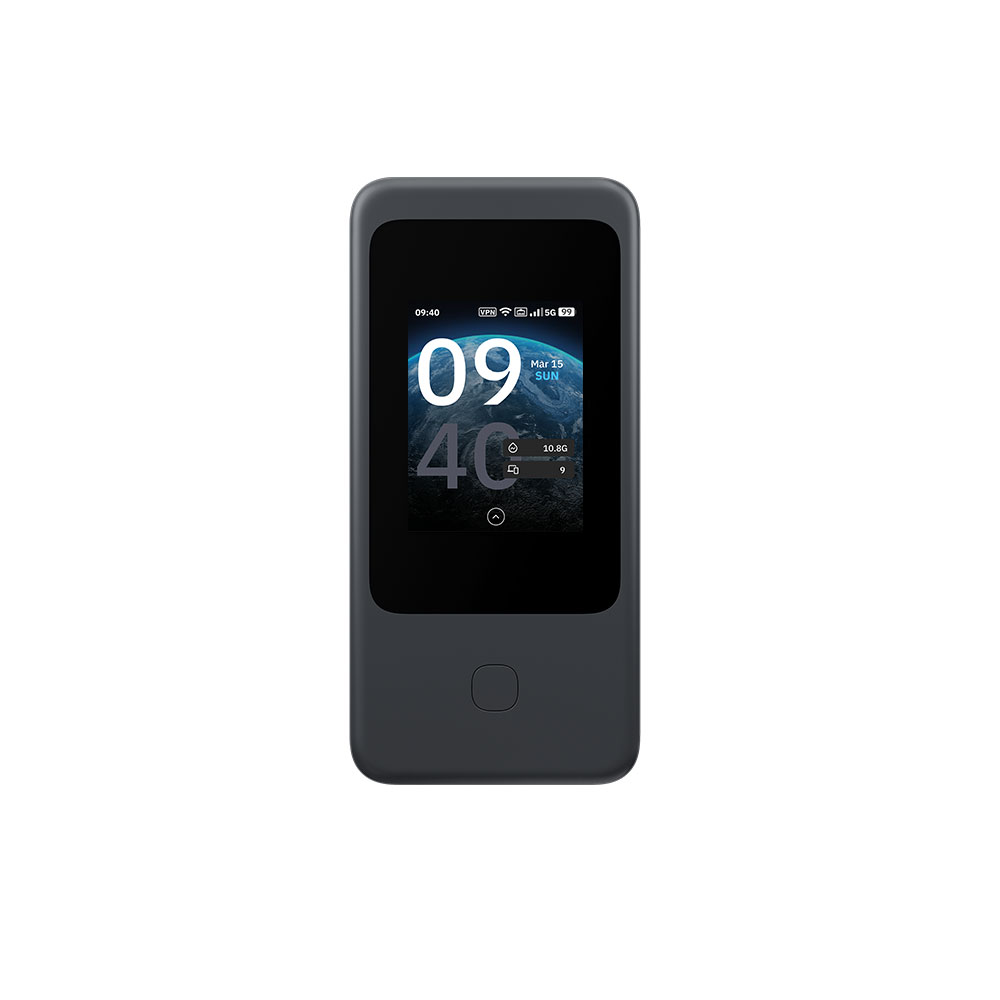
Everyday travel ergonomics are effortless thanks to unmatched SIM flexibility and intuitive controls. The device boasts Dual physical Nano-SIM slots alongside an integrated digital eSIM, letting you buy local prepaid data profiles abroad and switch carriers directly via the responsive 2.8-inch color touchscreen. That screen eliminates browser logins by serving real-time 5G signal telemetry (RSRP/SINR), data consumption gauges, and a one-touch Guest Wi-Fi QR code. Better yet, its automated captive portal handling clones your device’s MAC address in seconds, defeating complex hotel login splash screens without endless reconnect loops.
The Final Verdict: An Indispensable Travel Investment
At an MSRP of ~$419, the Mudi 7 is definitely an investment piece, and users looking for micro-sized microSD network storage will miss the card slot found on older models. But for remote professionals who refuse to trade speed for security, its combination of raw 5G performance, bulletproof VPN speeds, and open-source sovereignty makes it unrivaled in the portable networking space. If you want the fastest, most capable mobile security gateway money can buy in 2026, the Mudi 7 is the definitive gold standard.
Key Specifications at a Glance
GL-E5800 Flagship| Hardware Specification | GL.iNet Mudi 7 (GL-E5800) Details |
|---|---|
| Cellular Modem | Qualcomm Snapdragon X72 5G Sub-6 (Up to 4.67 Gbps Downlink) |
| SIM Architecture | Dual Physical Nano-SIM + Integrated Digital eSIM (Dual Standby) |
| Wi-Fi Rating | Wi-Fi 7 Tri-Band BE9300 (2.4 GHz + 5 GHz + 6 GHz, 320 MHz channels) |
| Processor & Memory | Qualcomm Quad-Core 2.2 GHz | 2 GB DDR4 RAM | 8 GB eMMC Storage |
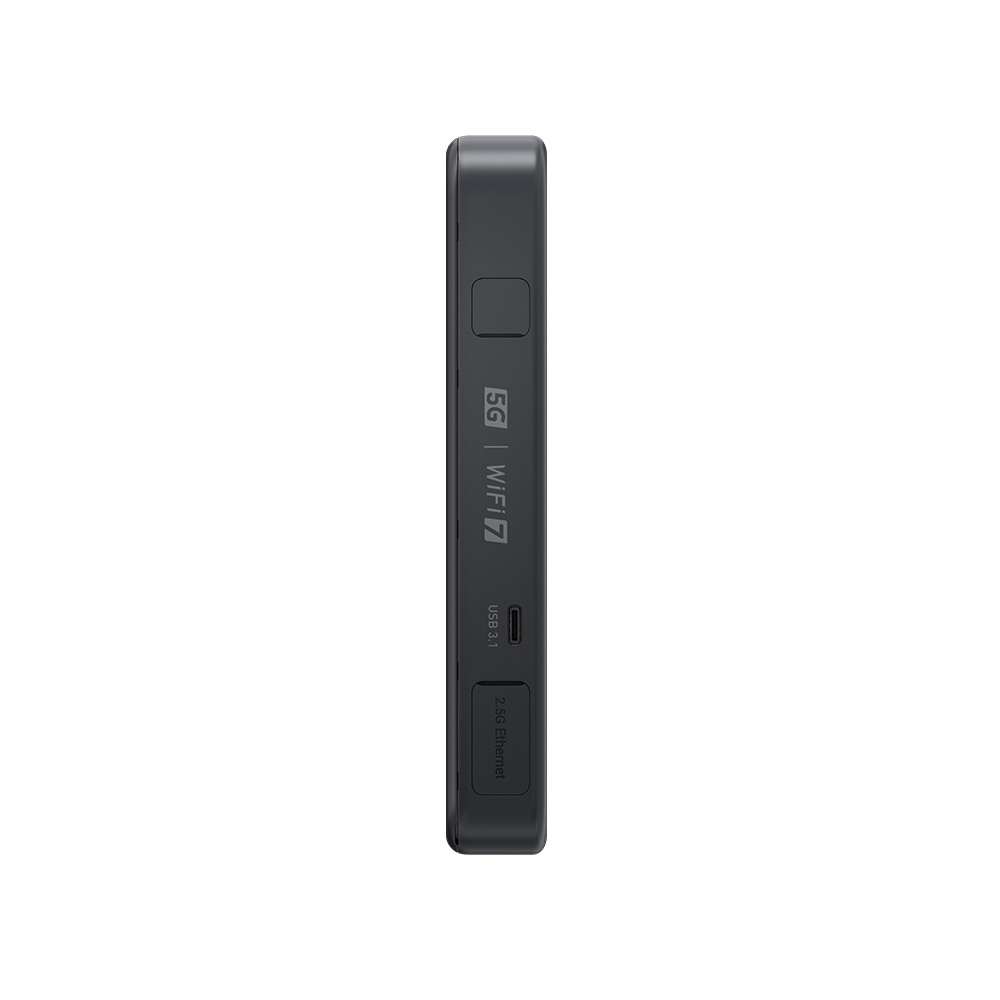
| Ethernet & I/O | 1 × 2.5 Gbps RJ45 Port, 1 × USB-C 3.2 Gen 2 (10 Gbps), Dual TS-9 Antenna Ports |
| VPN Encryption Speed | 600+ Mbps WireGuard • 700 Mbps OpenVPN (DCO) |
| Operating System | OpenWrt 24 (GL.iNet OS 4.x), Native AdGuard Home, Tor & Tailscale |
| Battery & Power | 5,380 mAh Removable Battery (11–13.5h runtime) with Mains Bypass Mode |
| Display | 2.8-inch Color Capacitive Touchscreen (Live Telemetry & Controls) |
| Dimensions & Weight | 157 × 75 × 22.8 mm | 300 g (10.6 oz) |
Field Testing: Pros & Cons
What We Love
- Blazing Cryptographic Throughput: 600+ Mbps WireGuard and 700 Mbps OpenVPN keep remote workflows fast and zero-trust.
- Future-Proof Tri-Band Wi-Fi 7: 320 MHz channels on 6 GHz cleanly bypass crowded hotel and airport Wi-Fi congestion.
- Versatile SIM Setup: Dual Nano-SIM slots plus built-in eSIM allow seamless multi-carrier travel abroad.
- Mains Bypass Mode: Safely runs 24/7 plugged in without the battery, preventing overheating and cell swelling.
- 2.8" Touchscreen Telemetry: Instant access to 5G signal metrics, SIM switches, and guest QR codes.
- OpenWrt Freedom: Root SSH, AdGuard Home DNS blocking, and zero vendor lock-in.
Trade-offs & Quirks
- Premium Investment: Priced at ~$419 MSRP, significantly higher than unpowered travel repeaters.
- No MicroSD Slot: Omits legacy onboard storage; network file sharing requires an external USB-C drive.
- Pocket Heft: At 300 grams (10.6 oz), it feels more like a rugged power bank than a featherlight dongle.