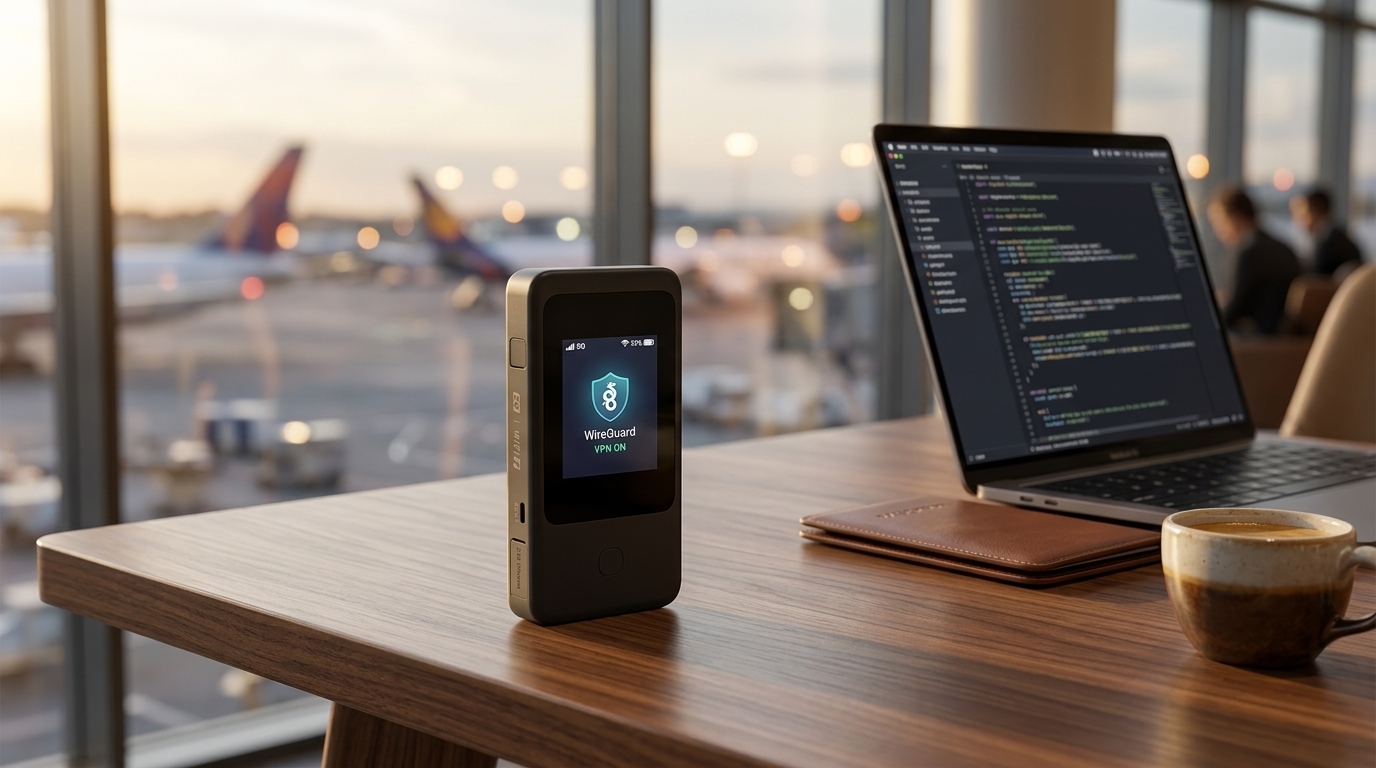
Road warriors and remote engineers have endured a maddening compromise for years: either buy a carrier-locked hotspot with zero VPN controls or carry an unpowered travel router tethered to an overheating smartphone.
Cellular & Wi-Fi 7 Powerhouse
Under the hood, the Mudi 7 is a cellular and wireless powerhouse powered by Qualcomm’s 4nm Snapdragon X72 5G modem, capable of theoretical Sub-6 downlink speeds up to 4.67 Gbps.
Dedicated Cryptographic Muscle & OpenWrt 24
Where the Mudi 7 truly pulls away from commercial hotspots like the Netgear Nighthawk is its dedicated cryptographic muscle and open-source operating system.
Long-Haul Power & Mains Bypass Mode
Power delivery and thermal endurance have also been engineered with long-haul travel in mind.
Ergonomics, Dual-SIM & Captive Portal Takedown
Everyday travel ergonomics are effortless thanks to unmatched SIM flexibility and intuitive controls.
The Final Verdict: An Indispensable Travel Investment
At an MSRP of ~$419, the Mudi 7 is definitely an investment piece, and users looking for micro-sized microSD network storage will miss the card slot found on older models.
Key Specifications at a Glance
GL-E5800 Flagship| Hardware Specification | GL.iNet Mudi 7 (GL-E5800) Details |
|---|---|
| Cellular Modem | Qualcomm Snapdragon X72 5G Sub-6 (Up to 4.67 Gbps Downlink) |
| SIM Architecture | Dual Physical Nano-SIM + Integrated Digital eSIM (Dual Standby) |
| Wi-Fi Rating | Wi-Fi 7 Tri-Band BE9300 (2.4 GHz + 5 GHz + 6 GHz, 320 MHz channels) |
| Processor & Memory | Qualcomm Quad-Core 2.2 GHz | 2 GB DDR4 RAM | 8 GB eMMC Storage |
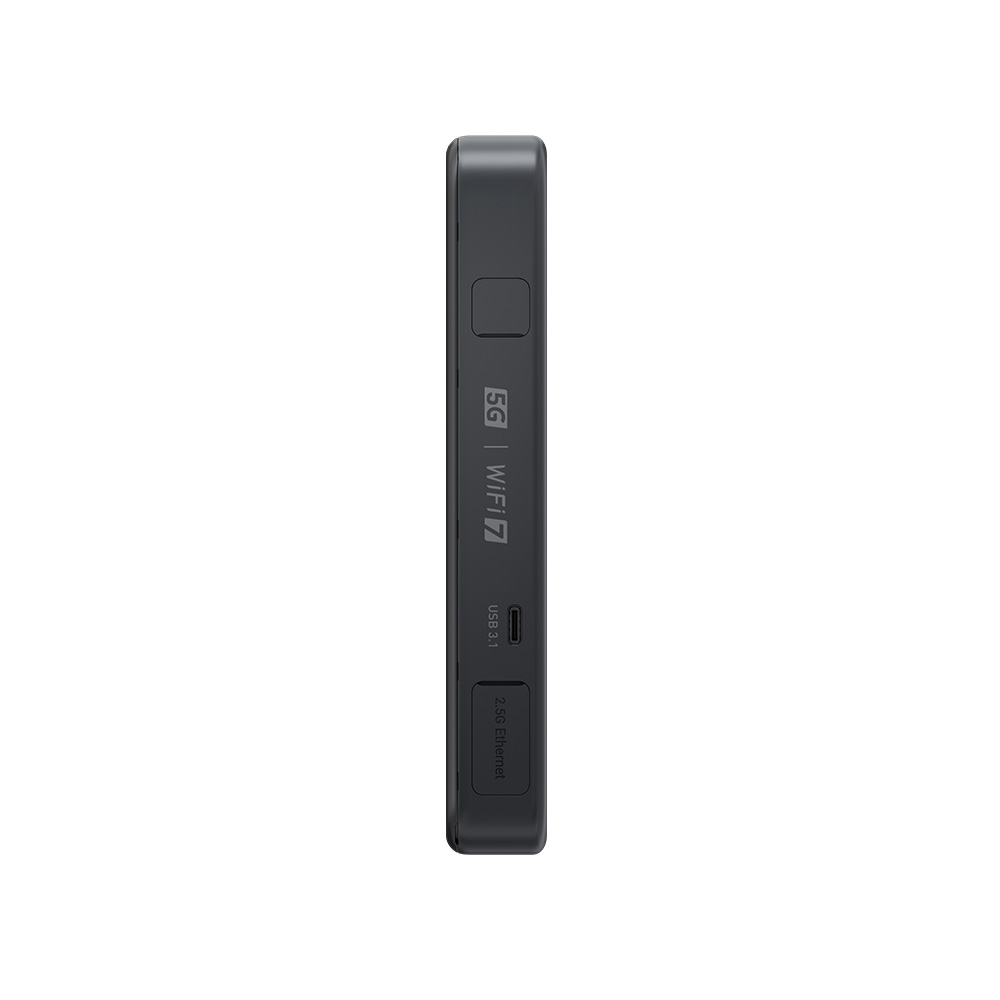
| Ethernet & I/O | 1 × 2.5 Gbps RJ45 Port, 1 × USB-C 3.2 Gen 2 (10 Gbps), Dual TS-9 Antenna Ports |
| VPN Encryption Speed | 600+ Mbps WireGuard • 700 Mbps OpenVPN (DCO) |
| Operating System | OpenWrt 24 (GL.iNet OS 4.x), Native AdGuard Home, Tor & Tailscale |
| Battery & Power | 5,380 mAh Removable Battery (11–13.5h runtime) with Mains Bypass Mode |
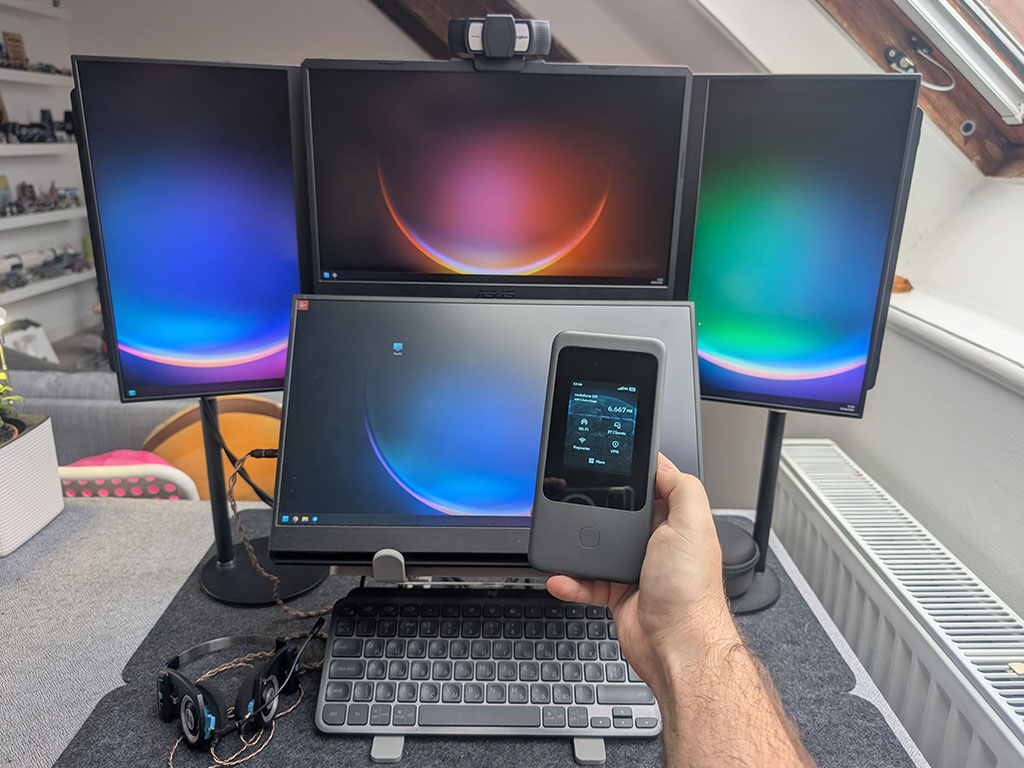
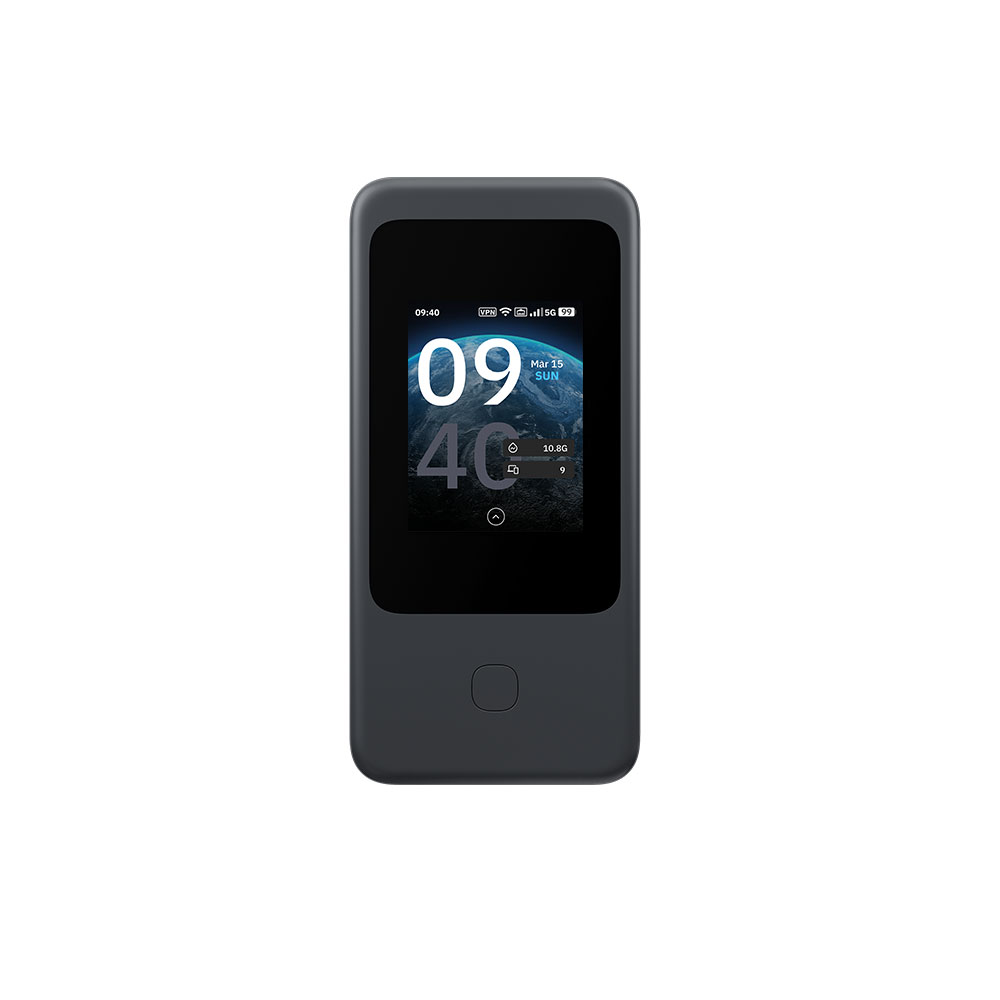
| Display | 2.8-inch Color Capacitive Touchscreen (Live Telemetry & Controls) |
| Dimensions & Weight | 157 × 75 × 22.8 mm | 300 g (10.6 oz) |
Field Testing: Pros & Cons
What We Love
- Blazing Cryptographic Throughput: 600+ Mbps WireGuard and 700 Mbps OpenVPN keep remote workflows fast and zero-trust.
- Future-Proof Tri-Band Wi-Fi 7: 320 MHz channels on 6 GHz cleanly bypass crowded hotel and airport Wi-Fi congestion.
- Versatile SIM Setup: Dual Nano-SIM slots plus built-in eSIM allow seamless multi-carrier travel abroad.
- Mains Bypass Mode: Safely runs 24/7 plugged in without the battery, preventing overheating and cell swelling.
- 2.8" Touchscreen Telemetry: Instant access to 5G signal metrics, SIM switches, and guest QR codes.
- OpenWrt Freedom: Root SSH, AdGuard Home DNS blocking, and zero vendor lock-in.
Trade-offs & Quirks
- Premium Investment: Priced at ~$419 MSRP, significantly higher than unpowered travel repeaters.
- No MicroSD Slot: Omits legacy onboard storage; network file sharing requires an external USB-C drive.
- Pocket Heft: At 300 grams (10.6 oz), it feels more like a rugged power bank than a featherlight dongle.